
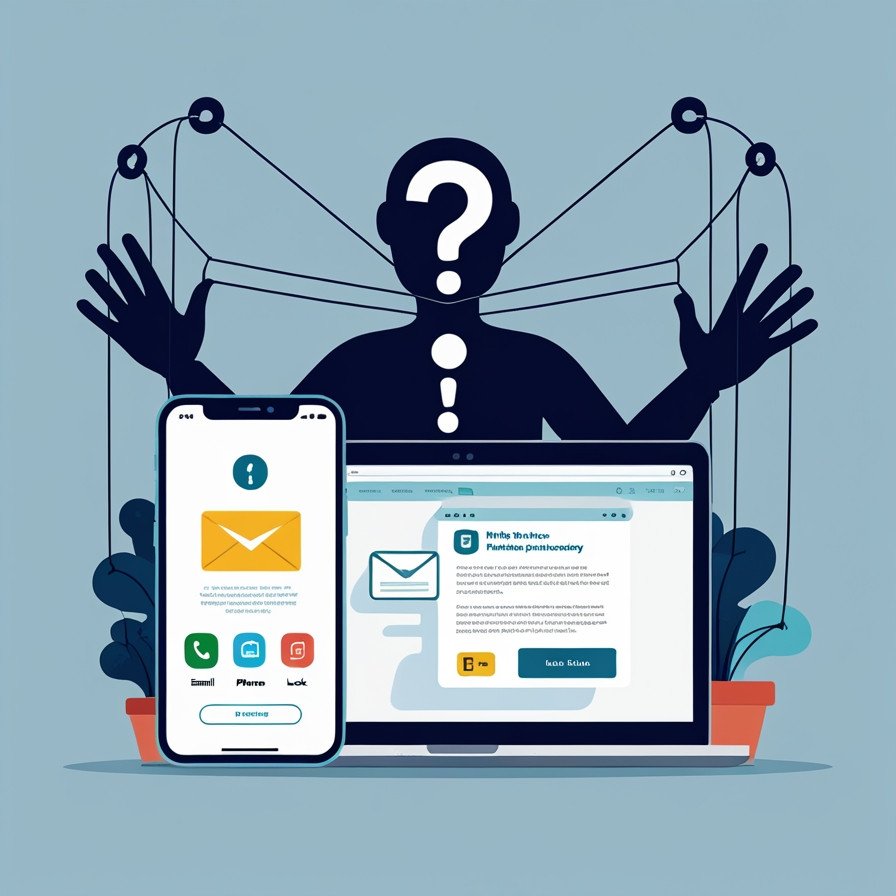
Social Engineering – How Hackers Hack Brains Before Systems?
In our fast-paced digital world, we often think that fortresses are those encoded by the most sophisticated algorithms, and that the greatest threat lies in a hidden software vulnerability or sophisticated virus. But what if the weakest link in the chain of security is not a piece of silicon, but human nature itself?
What is Social Engineering?
Simply put, social engineering is the art of psychologically manipulating humans to get them to do certain actions or reveal confidential information. It's a sophisticated scam that doesn't necessarily rely on sophisticated technical tools, but rather on a deep understanding of human behavior and exploiting our innate weaknesses, such as curiosity, fear, trust, or even a desire to help. A professional in this field doesn't break the password, but convinces you to give it yourself, which makes this type of attack exceptionally dangerous.
Social engineering is a set of tricks and techniques used to trick people into doing something or disclose confidential and personal information.
Social engineering takes many forms, it could be a phone call from someone posing as a technical support worker, an email that looks like it's from your boss, or even a casual conversation with a stranger at a coffee shop. The goal is always the same: to build a bridge of artificial trust and use it to reach what is not to be reached. These attacks don't just target ordinary individuals, but extend to large corporations and organizations, where a single human error can cost millions of dollars and lead to sensitive data leaks or the shutdown of vital systems.
The Psychology of Deception: How Does Social Engineering Work?
The success of social engineering lies in its exploitation of a set of basic psychological stimuli that guide our daily behavior. Attackers don't penetrate systems, they penetrate human decision-making. The most prominent of these incentives are:
-
Authority: Humans tend to comply with the requests of characters who appear to have authority or influence. When an employee receives an urgent email that appears to be from the company's CEO, or a phone call from someone claiming to be a security agent, they often carry out the request without hesitation, fearing consequences or wanting to show cooperation.
-
Urgency: Creating a false sense of urgency is an effective tactic to get victims to act quickly without critical thinking. Phrases such as your account is about to be closed in 24 hours or a very limited offer that ends today are intended to disrupt logical thinking and prompt the victim to make a hasty decision that serves the attacker's best interest.
-
Intimacy and affection Liking: We tend to trust people we feel intimate with or admired for. Attackers take advantage of this by building fake relationships on social media, impersonating friends or colleagues, or even simply showing affection and sympathy to gain trust.
-
Fear and Greed: Threatening messages claiming that you have a virus on your device, or that you are involved in illegal activity, are intended to spark fear. While Letters I've Won a Million Dollars! It exploits our natural curiosity and desire for easy gains. These temptations are often the gateway to install malware or detect data.
-
Helpfulness: Many people tend to help others, especially if they are in trouble. An attacker may pretend to be in dire need of help, such as a new employee who does not have access to a particular system, to exploit this human nature and disclose information or provide assistance that harms security.
Social engineering
techniques are constantly evolving, but some methods have proven effective over the years. Some of the most popular of these methods are:
-
Phishing Sending mass emails that look like they are from trusted sources to trick users into revealing their personal or financial information via links to fake sites. A message from the bank asking you to update your details via a link that leads to a fake page that is exactly the same as the original one, with the aim of stealing your login details.
-
Spear Phishing is a more sophisticated phishing attack targeting a specific individual or organization, gathering accurate information about the victim to design a highly personalized and compelling message. A letter to a CFO containing a fake invoice that looks like it is from one of the company's real suppliers, with detailed details about the project.
-
Pretexting is the fabrication of a scenario or a convincing excuse for information, which requires prior research to construct a believable and detailed story. A person who contacts the HR department claiming to be a new employee and needs certain information to complete their paperwork.
-
Baiting baiting lures the victim with something physical such as a USB key lying in the company's parking lot or digital like a free movie that contains malware. Leave a USB key with the title of Employee Salaries 2025 in a public place within the company. Curiosity will prompt someone to connect it to their device.
-
Quid Pro Quo Promise the victim something of service, help in exchange for obtaining information or performing a certain action, with direct interaction between the attacker and the victim. A person who randomly calls employees and offers to help them solve their technical problems, hoping to find someone with a real problem and give them access.
-
Tailgating/piggybacking is unauthorized entry into a safe area by following an authorized person closely, taking advantage of good faith or inattention. A person who follows an employee enters a safe building, and claims to have forgotten his card, and the employee opens the door for him without verification.
Social Engineering in the Age of AI: The Threat to Face If
traditional social engineering relies on human skill in deception, the entry of artificial intelligence into this field heralds a new and more dangerous era of attacks. It's no longer just just phishing messages full of spelling mistakes, but we're dealing with highly personalized and sophisticated attacks, which are difficult to detect even by experts.Thanks
to AI, social engineering has been transformed into a dynamic offensive environment that exploits both behavioral psychology and big data science, creating a new reality of cognitive warfare, where the human mind is directly targeted, and its decisions and choices are reshaped without being consciously targeted.
AI can analyze vast amounts of data available about us online, our posts, our likes, our relationships, and even our writing tone to tailor attacks to each individual. It can generate compelling emails, or even clone the voice of someone you know using deepfake techniques to ask you to transfer money or reveal sensitive information. This development makes it nearly impossible to distinguish between real and fake, and turns everyone into a potential target. AI can also learn and adapt to victims' responses, making attacks more subtle and effective over time.
Your shield is awareness:
Since social engineering targets the weakest link – the human – the first line of defense is the human himself. No antivirus software can protect you from yourself. Protection starts with raising awareness and building a human firewall. Here are some basic steps you can take to reduce your exposure to these attacks:
-
Always be skeptical: Treat any unexpected request for personal or financial information with extreme caution, even if it appears to be from a completely trusted source. Always verify the identity of the person or entity through another trusted communication channel, such as calling the bank directly through their official number available on their website, not the number in the message or call.
-
Don't respond to urgency or threat: Successful attacks often create a sense of pressure or threat to push you to make a hasty decision. Take a deep breath and think calmly before taking any action. If the message is scare or promises an unrealistic reward, it's most likely a scam attempt.
-
Protect your personal information: The less information you share about yourself online, the less ammunition attackers have to use against you in phishing or phishing attacks. Be careful about what you post on social media.
-
Use MFA: Enable multi-factor authentication on all your important accounts. Even if an attacker manages to steal your password, multi-factor authentication adds an extra layer of security.
-
Educate yourself consistently: Stay up-to-date with the latest social engineering techniques and cyber threats. The more you know about their tactics, the less likely you are to fall into their traps. Share this information with your family, friends, and co-workers to promote collective awareness.
-
Think before you click: Before you click on any link or open any attachment in an email, even if the message appears legitimate, hover over the link to check the real destination. If the link looks suspicious or doesn't match the expected source, don't click on it.
-
Report suspicious attacks: If you receive a suspicious email or fraudulent phone call, report it to your company's IT department or to the appropriate authorities. This helps protect others and contributes to the analysis and tracking of these attacks.
In the end, always remember that social engineering is not just a technical attack, it is a psychological battle. And the striker is betting that you won't think. Your most powerful weapon is to pause for a moment and ask: Does this make sense?. Often, this simple question is all you need to defeat the most cunning hackers, and protect yourself and your systems from hacking.