 English
 العربية

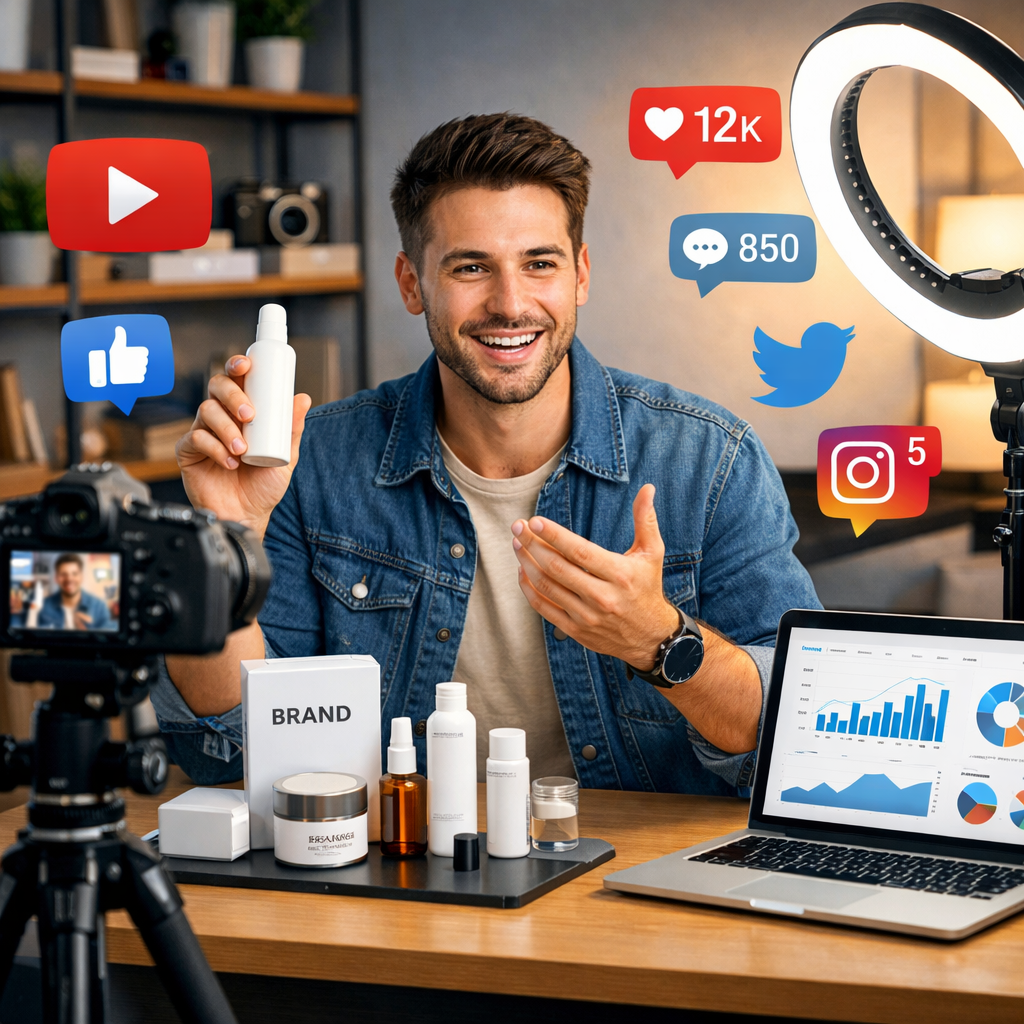
The Comprehensive Guide to YouTube Influencer Marketing.
In today's e-commerce world, it's no longer enough to put your product on the digital shelf and wait for customers. Competition is fierce, and consumer attention is dispersed among the thousands of daily advertisements. This is where YouTube comes into play not only as an entertainment platform, but as one of the most powerful marketing tools that SMEs can rely on to build real and sustainable trust with their audience. YouTube stands out from other platforms such as TikTok or Instagram by its unique ability to deliver long and in-depth content. While other platforms give you seconds to grab attention, YouTube gives you minutes to tell your brand's story, explain the benefits of your product in detail, and build a strong relationship with your viewer. In this article, we'll take you on a simplified journey to understand the world of YouTube influencer marketing, and how you can start building your first campaign successfully.
What is YouTube Influencer Marketing?
Simply put, it's a promotional strategy in which companies rely on collaborating with content creators who have a loyal fan base on YouTube. These influencers aren't just people with a camera, they're experts in their fields, whether it's in beauty, technology, cooking, or handicrafts and have built a lot of trust with their followers over the years. When an influencer that people trust talks about your product, it's not a traditional advertisement in the eyes of the viewer, it's a recommendation from a close friend or trusted expert. This type of marketing focuses on harnessing that trust to convert viewers into potential customers, and then into loyal customers for your brand.
Does it need a huge budget?
A lot of small business owners think that influencer marketing is only for big companies, but the reality is quite different:
-
Nano-influencers: They have less than 10k followers. The cost of collaborating with them is very simple starting at $20 or for free samples, but their influence is very strong because their audience is highly specialized and adaptable.
-
Micro-influencers: They have between 10k and 100k followers. These represent the golden zone for small businesses, combining good access with affordability.
-
Mega-influencers: They have millions of followers, and the cost of collaborating with them can exceed $20,000 per video.
The real secret to success is choosing an influencer who fits your budget and reaches your target audience precisely, not necessarily the one with the most followers.
Types of YouTube Influencer Marketing Campaigns
There is no one fixed form of collaboration, but there are several types you can choose from depending on your goal and budget:
-
Collaborations
Here the brand works with the influencer to create unique content or a new product together. For example, a makeup company might collaborate with a beauty expert to launch a special color collection bearing her name. This genre attracts a lot of attention because the audience is curious to see the outcome of this creative collaboration. -
Brand Trips are
very effective for lifestyle, tourism, and beauty businesses. The company invites a group of influencers for a trip to a premium destination to experience the products in a realistic and engaging environment. Influencers shoot daily Vlogs, making the viewer feel like they're part of the experience, and building a great brand awareness in a fun way. -
Contests and giveaways
are one of the fastest ways to increase engagement and attract new followers. The influencer asks their viewers to do some simple steps such as subscribing to the company's channel, or leaving a comment in exchange for a chance to win a free product. This method creates a state of excitement around your brand in record time. -
Product seeding
is based on sending free samples of your product to influencers without a formal contract, hoping that they will like the product and talk about it naturally. The advantage of this genre is high credibility, as the influencer is not obliged to praise the product, and if he does, the viewer knows that his opinion is genuine and unpaid. -
Sponsored content
is the most common form, where you pay an influencer an agreed amount in exchange for dedicating a portion of the video to talking about your product. The advantage here is full control, where you can agree in advance on which points to mention, and which links to put in the video description.
How do you build your marketing campaign step by step?
Success on YouTube needs sound planning and a clear vision. Here are the basic steps:
Step One: Clearly define your goals
Before you begin, ask yourself: What do I want to achieve?
-
Do I want to increase my brand awareness?
-
Do I want to explain how to use a complex product tutorial videos?
-
Do I want to increase direct sales?
Setting the goal accurately will determine the type of influencer and the type of content you will need.
Step Two: Define success metrics and KPIs
don't just look at the number of views. On YouTube, there are key performance indicators such as:
-
Watch Time: Did people watch the entire video or closed it seconds later?
-
Real engagement: The number of comments, likes, and shares.
-
Conversion rate: How many people actually clicked on the link in the description and made a purchase?
Step Three: Understand Your Target Audience
Who is the ideal person who will buy your product?
Instead of trying to target everyone, try to target a very specific category. When you address a specific group in their language and interests, your impact is much stronger and their response rate is higher.
Step Four: Prepare The Brief When
you communicate with an influencer, provide him with a summary that clearly explains what you expect from him, but be careful not to restrict his creativity:
-
Give it the key points to mention about the product.
-
Explain the legal caveats or words you don't like to use.
-
Ask him to put a special link in the description to measure the results.
-
Leave them free to present content in their own style, because their audience loves it for their unique style.
Step Five: Finding the Right Influencer
You can search in several effective ways:
-
Search engines: Look for words like the best reviews for your product type on Google and YouTube.
-
Social Platforms: Follow hashtags related to your industry and see who are the most active.
-
Marketing tools: There are sites that help you find out the real influencer stats, and the demographics of their audience to make sure they are a good fit for your brand.
Sixth Step: Communication and agreement
When messaging the influencer, be professional and personal. Start by talking about your liking for their content, and explain why you think your brand fits with what they offer their audience. Start by talking about your goals in general, then move on to financial details later.
Common mistakes to avoid
in order not to waste your budget, beware of falling into these mistakes:
-
Focus on the number of followers only: Engagement and relevance are much more important than the huge number of followers.
-
Neglect of the video description: A lot of sales are lost because the link was not clear or not mentioned in the video.
-
Not tracking results: If you don't measure results, you won't know what worked and what didn't to improve in the future.
-
Over-intervention in content: Remember that an influencer knows their audience better than you do, trust their creativity.
The 3 R's To
ensure the success of any campaign, three essential elements must be in place:
-
Reach: The ability of an influencer to reach a sufficient number of people within the target group.
-
Relevance: The relevance of influencer content to your product.
-
Resonance: The extent to which the audience interacts with the influencer and trusts their opinion.
YouTube influencer marketing isn't just a passing fad, it's a radical shift in how businesses communicate with consumers. For you as a small business owner, YouTube gives you a global platform to tell your story and build deep trust that traditional advertising can't achieve. Start small, choose influencers who are similar to your brand values, always focus on the quality and value you provide to the viewer, and over time you will find that YouTube can be the most powerful engine for your sales growth and the expansion of your business in the future. Always remember that the real secret is not in selling directly, but in building an honest human relationship with your audience.

Add New Comment