
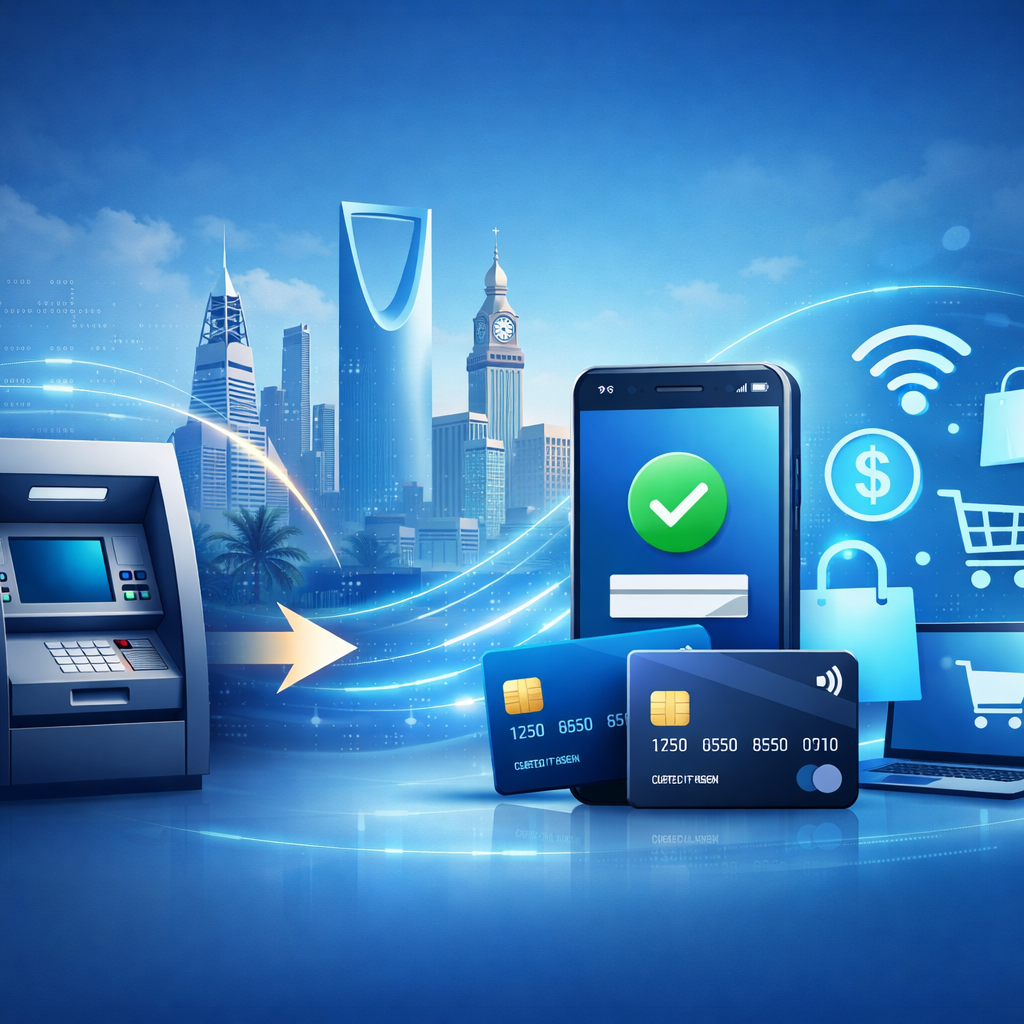
From Cash to Click – How did a quarter of Saudis' spending become electronic?
In the recent past, none of us could have imagined that our day would go by without touching fiat currencies or looking for an ATM on our way. The wallet bloated with money was a sign of readiness to shop, and cash was the uncrowned king of all groceries and markets. But today, if you walk the streets of Riyadh, Jeddah, or any Saudi city, you will find a completely different scene: smartphones, digital watches, and plastic cards have become the magic tool that opens the doors of trade. Saudi Arabia has witnessed an incredible digital transformation in the past few years, and online shopping is no longer just a luxury or experience for the younger generation, but has become an integral part of the daily culture of Saudi society in all its categories. In this article, we'll dive into the details of this shift, drawing on the latest figures and data, to understand how our buying habits have changed, and why Saudis today prefer to click on the currency.
The story of numbers.
When we talk about the economy, it's the numbers that tell the real story. According to recent data from the Saudi Central Bank SAMA, there has been a radical change in the way we spend our money. In November 2024, e-commerce accounted for about 15% of total spending in the Kingdom. However, in just one year, in November 2025, this percentage jumped to 22%. This simply means that nearly a quarter of the riyals spent by Saudis now goes through electronic channels. If we look at the bigger picture, total spending including in-store purchases, online purchases, and cash withdrawals grew by 11% to reach 129 billion riyals in just one month. This growth reflects not only an increase in consumption, but also a growing confidence in the digital ecosystem.
Points of sale in stores:
-
November 2024 quota: 48%
-
November 2025 quota: 46%
-
Trend: A slight decline.
Cash Withdrawals:
-
November 2024 quota: 37%
-
November 2025 quota: 32%
-
Trend: Continuous decline.
E-commerce:
-
November 2024 quota: 15%
-
November 2025 quota: 22%
-
Direction: Accelerated growth.
Goodbye to cash.
The most interesting observation is the decline of reliance on traditional criticism. Cash withdrawals from ATMs have decreased their share from 37% to 32%. This decline was not a coincidence, but a direct result of the growth of digital alternatives. While people used to go to the cashier to withdraw money before heading to the market, now they go directly to the market with their cards, or more importantly, order what they need from the comfort of their homes. Even traditional POS devices that we swipe the card on in stores are starting to feel competitive. Although it still retains the lead at 46%, its share is eroding in favor of online stores. As the popular saying goes: the world doesn't last for anyone, after POS pulled the rug out of cash years ago, today e-commerce is pulling the rug out of everyone.
Why do Saudis prefer online shopping?
Some may wonder what drove people to change their habits so quickly?
-
Easy and convenient: Instead of driving in the traffic and looking for parking, you can now compare prices from dozens of stores at the touch of a finger. Delivery apps are now providing everything from loaf of bread to the latest computers.
-
Multiple payment options: Having a robust national payment system like Mada and supporting phone payment services such as Apple Pay and STC Pay, made the payment process faster than taking the wallet out of pocket.
-
Trust and Security: Thanks to the strict laws set by the Ministry of Commerce and the Saudi Data and Artificial Intelligence Authority, consumers feel safe when entering their card data, with guarantees of refund and protection of rights.
The difference between buying coffee and buying a refrigerator
There's a nice statistic that tells us a lot about our buying behavior, which is the average value of a single transaction. At the point of sale of traditional stores, the average value of a single transaction is around 59 riyals. This indicates that we use the card in stores to buy small, everyday items: coffee, a quick meal, or some simple groceries from the supermarket. In e-commerce, the average value of a single transaction jumps to 175 riyals. This means that online shopping is more focused on the most valuable purchases, such as clothing, electronics, furniture, or travel bookings. People prefer to spend more time researching and comparing expensive purchases, which online platforms provide par excellence.
Vision 2030: The Hidden Engine Behind Transformation
We cannot talk about this development without mentioning Saudi Vision 2030. One of the strategic goals of the vision is to reach a 70% cashless society by 2030. The figures we see today confirm that we are moving at a faster pace than expected. The government has not only set goals but has also worked to create an infrastructure environment. Through the National Transformation Program, the procedures for opening online stores have been facilitated and Fintech startups have been supported. Today, there are hundreds of Saudi companies offering innovative solutions for payment, financing, and logistics, making the ecosystem integrated and robust.
The role of AI in the shopping experience
and in 2026, online shopping is no longer just images and buttons. Artificial intelligence has come in strongly to change the way we shop. Now, online stores know your personal taste and suggest what suits you best with amazing accuracy. There are AI agents who help you choose the right size or coordinate the furniture in your room with AR technology before you buy it. This technological development has made e-commerce not only easier, but also more fun, increasing consumer loyalty to these platforms. Today, you can see a product you like in a photo, and thanks to artificial intelligence, it is recognized and directed to the best available price in Saudi Arabia. Voice search technologies are also taking their place, with operations taking place in seconds without even having to touch the phone, making the jump to 22% logical and predictable. Technology has become an obedient servant that facilitates our daily lives.
Challenges and opportunities for the future
Despite this resounding success, there is still room for further development. As electronic operations increase, so does the need to strengthen cybersecurity to protect users' data. There is also a huge opportunity for small businesses and Saudi artisans to enter this world: e-commerce has abolished geographical boundaries, and a craftsman in a small village can sell his products to a customer in a big city with the push of a button. Also, the logistics sector is challenged to keep pace with this growth, as consumers expect their order to arrive within hours. This creates enormous job opportunities in the transport sector. We are now seeing Saudi companies competing to offer express delivery solutions using sophisticated algorithms to distribute orders efficiently, reducing wait time and fuel consumption.
Youth and women are the primary driver of the digital market We
cannot ignore the demographics of the Kingdom when analyzing this growth. Saudi Arabia has a broad base of technologically connected young digital natives who were born with smartphones in their hands. These young people are driving the wave of change, and they are the boldest to experiment with new platforms and innovative payment methods. On the other hand, Saudi women have played a pivotal role in the prosperity of e-commerce, as they have become their first choice to save time and effort with their extensive entry into the labor market. E-commerce has also opened doors for women entrepreneurs, and today we see thousands of stores run by women from their homes, which has contributed to diversifying the sources of income of Saudi families.
Cybersecurity is the custodian of our money
With all this growth, the question of security is emerging as a top priority. So how do we ensure that these billions spent electronically remain out of the hands of fraudsters? The world's highest security standards have been put in place to ensure the safety of financial operations. Technologies such as strong encryption and two-factor authentication have become an integral part of any purchase. When you pay with a mada card online, you go through fully secured payment gateways, which ensure that your sensitive data does not reach any third party. This honest guardian is what has given the Saudi consumer full confidence to shift a quarter of their spending to the digital space without fear. The Kingdom has become a leader in the fight against financial fraud thanks to awareness campaigns and cooperation between banks and security agencies. Community awareness is the first line of defense, as citizens and residents understand how to distinguish between secure and suspicious links, which has reduced fraud rates despite the increase in operations.
Consumer Tips in the world of digital shopping
Since we spend a quarter of our money online, it's important to follow a few simple rules to ensure a safe and cost-effective experience:
-
Compare before you buy: Don't settle for the first store you find, the competition in the digital world is fierce and prices are constantly changing.
-
Make sure trusted: Always look for stores that are registered with the Trusted platform or that have a clear business record to ensure your rights.
-
Take advantage of the offers: Online stores offer exclusive discounts for app users or when paying with certain cards, so be smart to take advantage of them.
-
Protect your data: Don't share OTPs with anyone, and use strong, different passwords for your accounts.
The transformation we are experiencing today in Saudi Arabia is not just a change in sales figures; it is a change in mindset and culture. Saudi society has proven to be a vibrant, tech-receptive society, and able to adapt to the future at astonishing speed. Reaching 22% of total spending is just a stop on a long journey. The future holds promise for more innovations; we may soon see mass payment via facial ID, or the arrival of orders via drones. But no matter how much the means changes, the goal remains the same: to make the lives of citizens and residents easier and more accessible. So, the next time you hit the checkout button from your phone, remember that you're not just a shopper, you're part of a major digital revolution that is putting the Kingdom at the forefront of the world in the digital economy. The time of cash is over, and the time for clicks has begun, and the future is already in your hands.