 English
 العربية

Target Audience – Your Simplified Guide to Understanding and Reaching Your Customers
In today's business world, whether you're a large business owner or a small business, understanding your customers is the key to success. Imagine that you are selling a great product, but you are trying to sell it to everyone you see. This is like shooting an arrow in the dark; the target may accidentally hit the target, but it is often lost. This is where the target audience comes in, a concept that will change the way you think about marketing and sales.
What is your target audience?
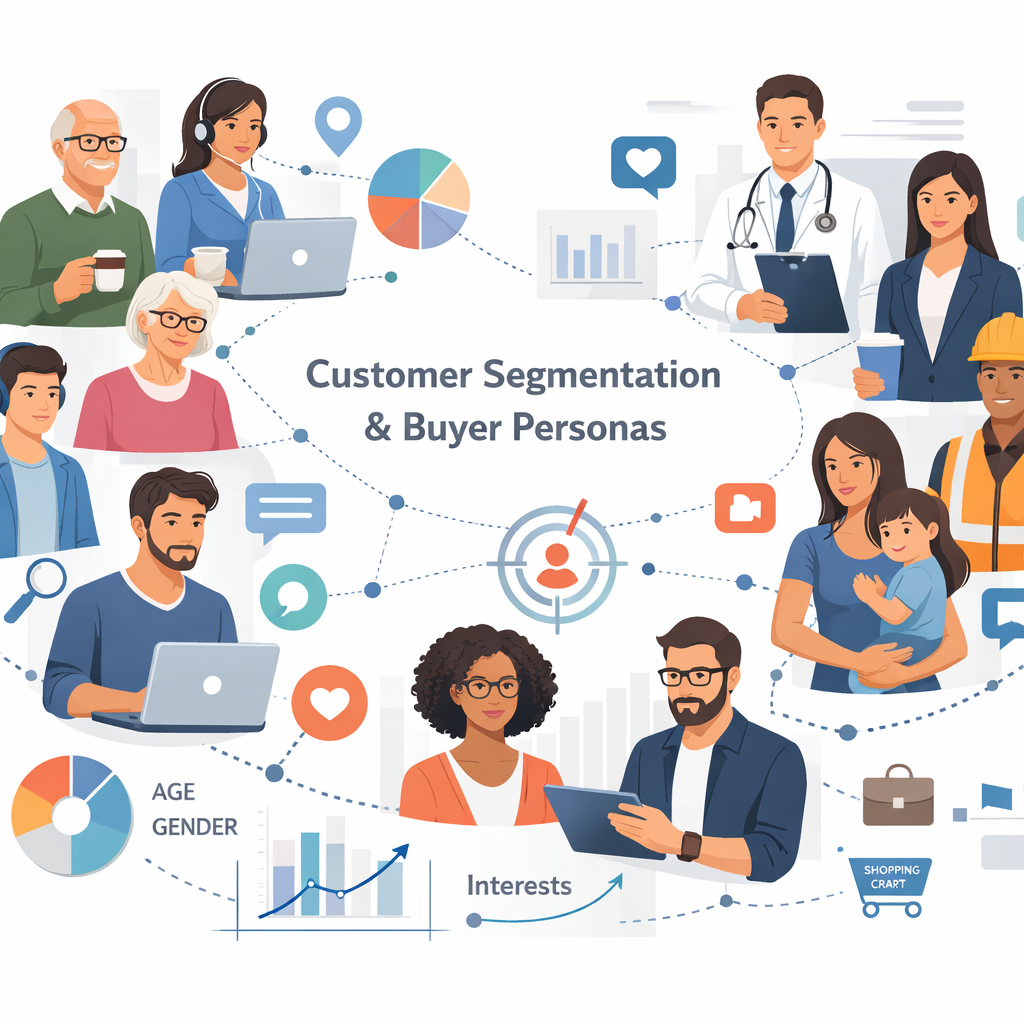
A target audience is simply a group of people who are likely to be interested in your products or services. These people share certain qualities that make them more likely to buy from you. These qualities are not limited to age or gender, but also include their interests, jobs, income, and even the challenges they face in their daily lives.
For example, if you sell modern electronics, your target audience is likely to be young people between the ages of 15 and 45, who are interested in new technologies and have a medium or high income. These are the people who are looking for the latest digital devices and want to own them. Let's say you're selling high-end smartwatches, your target audience will focus on active individuals who care about health and fitness and want to track their daily activity using the latest technology. Understanding these fine details helps you tailor your marketing messages so that they speak directly to these people and meet their needs and desires.
Difference Between Target Audience, Target Market, and Customer Persona
These terms may sound similar, but there are clear differences that make each important in its place:
-
Target Market: This is the broader concept. It refers to all potential consumers in a particular geographic area or sector. For example, the target market for an electronics store may be consumers in Riyadh . This market may include different age and income groups, but they all fall within the geographic scope of the store serves.
-
Target Audience: It is part of the target market. It focuses on a more specific group within this market, which shares certain traits as mentioned earlier. In the example of an electronics store, the target audience is young people interested in technology in Riyadh . These are people who have a special interest in technological products, have purchasing power and a desire to acquire new ones.
-
Buyer Persona: This is the most detailed and specific model. He represents one ideal client with very specific demographic, psychological, and behavioral characteristics. For example, the character of the client could be Ali, a 22-year-old college student who lives in Riyadh, follows the latest trends in mobile phones and gaming consoles, spends his free time watching YouTubers who specialize in technology and gaming, and loves to exercise . This persona helps you understand your customer as a real human being, including their motivations, challenges, and goals, allowing you to design more humane and effective marketing strategies .
Why is identifying your target audience so important?
Some people may think that their products or services are suitable for everyone, and this is a misconception. No product can meet the needs of all people. Identifying your target audience saves you a lot of effort and money, and makes you more effective in your marketing efforts . Here are a few reasons why identifying your target audience is vital to the success of any business:
-
Effectively direct your marketing efforts: When you know who your audience is, you can direct your marketing messages to them. Instead of wasting money on generic ads that don't reach anyone, you can create ads and content that speaks their language and touches their interests . For example, if your target audience is young, you'll use trendy language and platforms like Instagram and TikTok. If your audience is business, you'll focus on professional content and platforms like LinkedIn. This precise routing ensures that your message reaches the right people at the right time.
-
Develop the products and services that customers really need: Understanding the needs and challenges of your audience helps you develop products and services that better meet those needs. This means that you will be offering something that people really want, which increases your chances of success .
-
Improve communication and build strong relationships: Knowing your audience helps you choose the right channels to connect with. When you know where they are, you can reach them more effectively . Understanding their communication style also helps you build strong and sustainable relationships with them, which increases their loyalty to your brand.
-
Increase sales and make profits: Ultimately, the goal is to increase sales. When you target the right people with the right message across the right channels, you increase the likelihood that they will convert into paying customers . This leads to increased revenue and profits, and ensures the continuity and growth of your business.
-
Outperform your competitors: When you understand your target audience better than your competitors, you can offer them more attractive offers and services. This gives you a strong competitive advantage in the market, and helps you attract and retain more customers.
Characteristics of your target audience:
To understand your target audience, you need to gather information about their different characteristics. These features help you build a clear picture of who you're trying to reach:
Demographics:
This is basic information about people, and it's easy to measure and collect, such as:
-
Age: The age group they belong to.
-
Gender: Male or female.
-
Income: The level of monthly or annual income.
-
Position: Type of work or profession.
-
Location: Where they live.
Interests and Lifestyle Psychographics:
These characteristics go deeper into your audience's personality, include psychological and behavioral aspects, are more difficult to measure but provide valuable insights:
-
Hobbies and Hobbies: What do they like to do in their free time?
-
Values and beliefs: What principles do they believe in?
-
Opinions and issues: What causes are they interested in or support?
-
Lifestyle: How do they live their daily lives?
Purchase Intent:
This property relates to how willing they are to buy. Are they looking for a specific product? Have they done previous searches that indicate they are interested in buying?
How do you accurately identify your target audience?
Identifying your target audience is not just guessing, it is a systematic process that requires research and analysis. Here are five practical ways to help you pinpoint your audience:
First, get to know the audience of
competitors often have already done some research to determine their audience. You can take advantage of this by studying who they are targeting. Use competitor analysis tools like Semrush to understand the demographics, interests, and behaviors of your competitors' audience. This will give you a good idea of which categories might be interested in your products or services.
Second, keep an eye on social media
social media is a treasure trove of information about your audience. You can note:
-
The type of content they interact with: Do they prefer short video reels, image infographics, or long-form articles?
-
Platforms they use the most: Do they spend most of their time on Facebook, Instagram, Twitter X, or LinkedIn?
-
Comments and discussions: Read their comments and posts to understand their interests and challenges.
This feedback will help you build a clearer picture of your audience and their preferences, and design marketing strategies that match their digital behaviors.
Third, use Google Analytics
If you have a website, Google Analytics provides you with valuable data about your website visitors. You can find out demographic information about them such as age, gender, location, and language. You can also see which pages they visit the most, the time they spend on your site, and the sources of traffic. This data helps you understand the behaviors of your real audience on your site and identify the content that is most appealing to them.
Fourth: Conduct
in-person or online interviews with potential or existing clients are an excellent way to get deep and rich information that can't be obtained from digital data alone. You can ask questions about:
-
Problems they face: What challenges are they trying to solve?
-
What do they like about your product or service: What features do they prefer?
-
How they spend their free time: what activities do they do?
Interviews can be pre-planned with specific questions, or spontaneous that allow for natural dialogue and the discovery of unexpected information.
Fifth: The Polls
Polls are an easy and effective way to gather data from many people, especially when you need quantitative opinions. You can use tools like Google Forms or SurveyMonkey to create simple surveys. Ask questions about their interests, preferences, challenges, and how they prefer to communicate. Post these surveys on your website, via email, or on social media. Make sure the questions are clear and straightforward, and that the options are easy to choose to increase the response rate.
Identifying your target audience is not just a marketing step, it is the foundation for the success of any business. When you understand who your customers really are, you can build effective marketing strategies, develop products that meet their needs, and connect with them in a way that makes them feel like you're talking directly to them. Start today by identifying your target audience, and you'll see how it can make a big difference in the success of your business and lead you towards achieving your business goals successfully and sustainably.
Add New Comment