
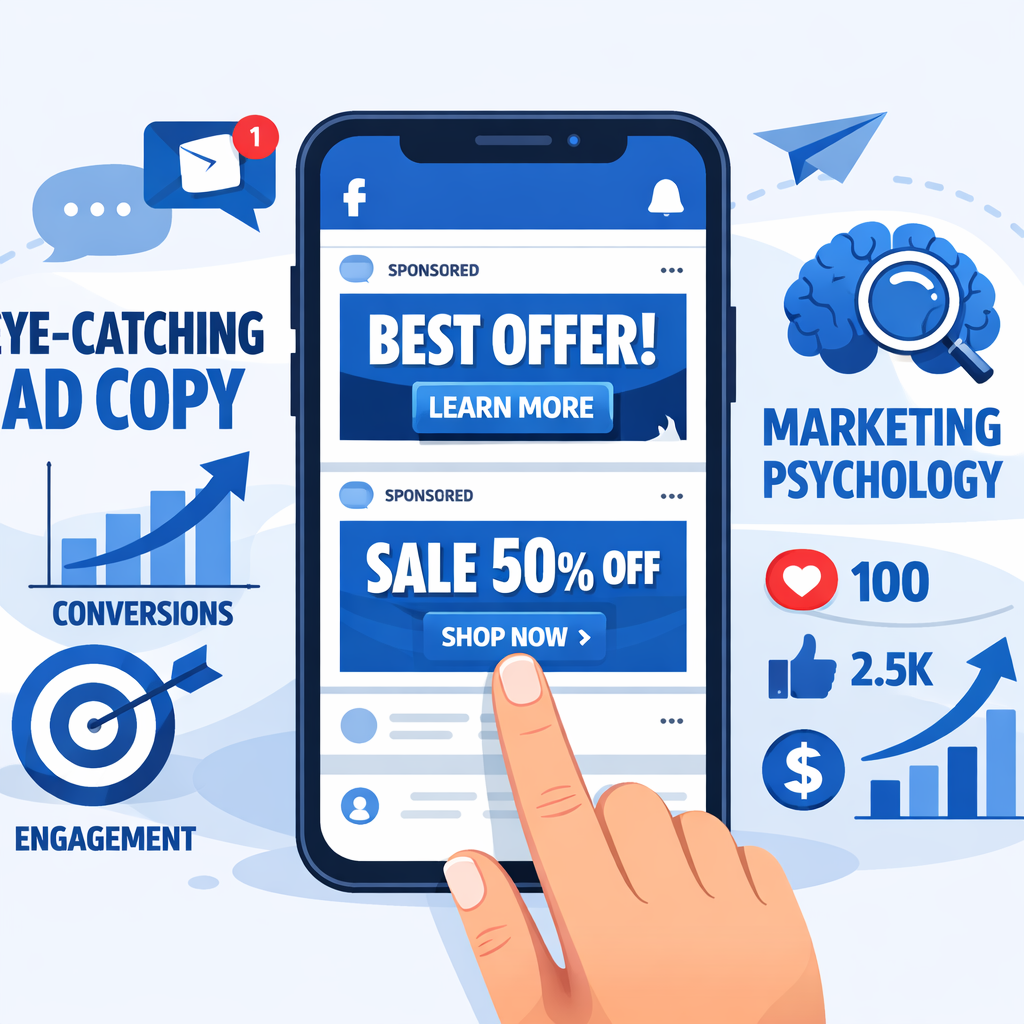
A Guide to Successful Facebook Ads Writing
In our fast-paced digital world, endless scrolling has become a daily habit for millions. For business owners and marketers, this is the biggest challenge: how do you get someone to stop scrolling to see your ad? A successful Facebook ad isn't just about a beautiful image, it's a combination of deep understanding of the audience, a clear message, and smart psychological stimulation. In this article, we'll take you on a comprehensive journey to understand the secrets of copywriting, going over 10 real-life examples from top brands, with additional tips to get you a pro even if you're a beginner and non-specialist.
What does an advertisement consist of?
Before we start writing words, we need to know where those words will be placed and how the client sees them. A Facebook ad consists of five main parts that work together as a team to convince the customer:
-
Primary Text: The text that appears at the top of the ad, just above the image or video. In Facebook's mobile version, only the first 125 characters appear, after which the customer has to click Show More. So, the golden rule here is: put the most important piece of information or the strongest presentation in the first line. If you don't attract them in the first 3 seconds, you lose them.
-
Creative: A photo, video, or photo collection. Its primary function is to stop thumb-stopping. The creative element should be visually appealing and fully relevant to the message you're writing.
-
Headline: Appears in bold and clear font under the creative. You have limited space of about 40 characters to tell the customer exactly what they will get. Example: 50% off for a limited time or get smooth skin in 7 days.
-
Description: This small text appears just below the title. It is often used to add additional details that increase customer reassurance, such as free shipping on all orders or a two-year warranty.
-
Call to Action (CTA): The magic button that guides the customer to the next step, such as Shop Now or learn more.
Types of ads you can use
-
Image ads: Simple and straightforward for a single product.
-
Video ads: To explain the product or tell the brand story.
-
Carousel Rotor Ads: Displays multiple products that can be scrolled through.
-
Collection ads: Combine video and product images to make it easy to shop quickly.
Real-life examples of successful ads Why did they work?
Let's analyze how global brands craft their messages simply and intelligently:
-
Fulton Medical Brushes
Company Idea: Focus on benefits and guarantee.
The company used text that directly explains how the product solves foot and back pain. They didn't just mention the technical specifications, they focused on the end result, which is comfort. They also added a money-back guarantee, which removes the risk of buying from the customer's mind and makes them bolder about the experience. -
Element Brooklyn Detergent
Company Idea: Smart Comparison and Price.
They directly compared the price of their product with luxury brands that give off the same scent. They used simple, humorous language to make it clear that the customer is getting luxury at a lower price. A direct comparison is the fastest way to convince a customer who is reluctant because of the price. -
Cocolab Children's Products
Idea: Addressing the Parent Decision-Maker.
Although the product for children is colored dental floss, the text was aimed at parents. They focused on security, ease of use, and how they developed the product based on previous customer feedback. This gives the impression that the company listens to its customers and cares about the quality of its products. -
Made In Cookware Cooking Tool
Company Idea: Quality Above Appearance.
In a world full of colorful pots, this company has focused on making their pots not just beautiful colors, but quality that lasts. Use a strong phrase: invest in non-toxic, long-lasting cookware, and this speaks to the conscious customer looking for sustainability and health. -
The Italian shoe company Calzuro
Idea: Creating a state of seasonal urgency.
They used the carousel ads to display colors that fit the autumn season. In terms like fall favorites, they made the customer feel that these colors are now necessary to fit their current outfit, even though they are available all year round. Linking the product to a specific season increases the immediate purchase desire. -
Fly By Jing Food Company
Idea: Using Social Proof and Humor.
They relied on real customer reviews and used youthful and playful language. They also explained to the customer that they can find the product in local stores, making it easier for those who don't prefer to wait for shipment or prefer to preview before buying. -
L:a Bruket Skincare
Company Idea: Solve a small problem intelligently.
The ad focused on the lip balm holder that prevents it from being lost. They used words like exclusive and for a limited time to create a quick desire to own up. Sometimes it's a small accessory that draws visitors to the product homepage. -
Dieux Skin Beauty Products
Company Idea: Data and Transparency.
This company boasts that its products are backed by studies. In their ad, they used short, strong text at first, then expanded on the explanation of the ingredients and results within the images. This builds deep trust with customers who are looking for real and tangible results. -
Anyday Microwave Tools Company
Idea: UGC User-Generated Content Style.
The ad looked like a video from a friend rather than an official one. The text focused on the pain point of home cooking fatigue and boredom of fast food, presenting their product as a compromise, quick and healthy at the same time. -
Bed Threads Furniture
Company Idea: Using the authority of major magazines.
They used a quote from the famous Vogue magazine in the text of the ad. When a customer sees that a global magazine praises the product, any doubt they have about the quality fades. External credibility is the most powerful weapon in copywriting.
Psychological stimuli: How do you attract the customer intelligently?
Copywriting isn't just a pile of words, it's an applied psychology. Here are the most important drivers that make us make purchasing decisions:
-
Social Proof: Human beings are naturally confident in the experiences of others. Instead of saying we're the best, say join over 10,000 customers who trust us.
-
Scarcity Principle: When we feel that something may be running out, its value increases in our eyes. Use phrases like very limited quantity or a one-time special edition.
-
Urgency: Discount expires in 4 hours or order within an hour to receive it tomorrow. This prevents the client from procrastination.
-
Focus on the pain and then the solution: Start your ad with a question that touches on a real problem: Do you have back pain when you wake up?. Once the customer reads this, they will feel that you understand them.
-
Emotional connection and story: We don't buy products, we buy the emotions they provide us. Don't sell a camera, sell your beautiful memories.
Common mistakes beginners make
avoid these pitfalls to ensure your ad budget isn't lost:
-
Long and complex texts: People don't read articles in ads. Keep your sentences short, simple, and direct.
-
Lack of clarity on the action request: Make sure there's a clear button that tells the customer what to do after seeing the ad, e.g., Shop Now.
-
Talk about yourself, not the customer: The customer doesn't care about how great your company is, they care about how their problem will be solved or their life will be improved.
-
Ignore phone users: Make sure your images and text look clear and easy to read on small phone screens.
-
Neglect to reply to comments: Advertising is the beginning of a dialogue. Responding to customer inquiries under the ad increases your credibility and encourages others to buy.
How do you test your ad? A/B Testing
doesn't just rely on your intuition. Professionals do what's called A/B testing:
create two ads that are identical in everything, but change only the headline in one. Watch which one produces better results for 3 days. Next time, hold the title and change the image. This way you'll know exactly what your audience likes and what drives them to click and buy.
Additional tips for enriching your ad
-
Emojis: Use them to break the deadness of text and attract the eye, but without exaggeration.
-
Power of offer: Make sure what you offer is really worth the customer stopping by.
-
Visual Harmony: The colors of the image should match the tone of the text, for example: calm colors for relaxation products.
Get started Simply writing
Facebook ads isn't magic, it's a skill that develops with practice and observation. Start by focusing on your customer's problem, present your solution clearly, and use an image that grabs attention. Always remember that simplicity is the pinnacle of sophistication, and honesty in presentation is what builds a brand that lasts and grows. Ready to write your first ad today?